
A well-designed book can tell a story in a way that a brochure or presentation often cannot. It gives readers something to explore at their own pace, combining photography, written content, and visual design to create a lasting impression. This is one reason businesses, hotels, architects, artists, and cultural organizations use coffee table books to present their work and share their stories.
A coffee table book is more than a collection of attractive images. Its content, layout, typography, and physical presentation work together to communicate a particular idea or identity. When planned carefully, it can document important projects, showcase achievements, highlight a destination, or introduce readers to a brand’s creative vision.
What Is a Coffee Table Book?
A coffee table book is a visually focused book usually designed for display on a coffee table, reception desk, or another shared space. It commonly features high-quality photography, illustrations, carefully arranged text, and an attractive physical format. Unlike books that rely mainly on long passages of text, coffee table books often communicate through a combination of images, short explanations, captions, and editorial layouts.
These books cover a wide range of subjects, including architecture, interior design, travel, fashion, art, photography, history, food, and business achievements. The format is not limited to personal collections or artistic publications. Businesses can use coffee table books as branded publications for clients, partners, investors, visitors, and other audiences.
Although coffee table books are often associated with large, hardbound editions, their size, length, and production style can vary. The right format depends on the subject, intended audience, available content, and purpose of the publication.

What Is the Purpose of a Coffee Table Book?
The main purpose of a coffee table book is to present a subject in an engaging, visually memorable way. It gives photographs, ideas, places, products, or achievements enough space to be explored without overwhelming readers with information. A well-planned publication balances visual appeal with meaningful content, allowing each page to contribute to the overall story.
Coffee table books can also preserve a record of important milestones. Companies may create publications to celebrate anniversaries, document major projects, recognize a founder’s contribution, or present the history of an organization. Cultural institutions and tourism bodies may use them to record heritage, traditions, and places worth exploring.
Another purpose is to create a lasting reference for readers. Unlike a digital post that can quickly disappear from view, a printed book can remain in an office, hotel lounge, meeting room, or reception area for years. Its usefulness depends on the quality of its content and production, but a thoughtfully created book can continue to represent the subject long after its initial distribution.
How Businesses Can Use Coffee Table Books
Coffee table books can serve different purposes depending on a business’s industry, audience, and communication goals. The strongest publications begin with a clear reason for existing rather than simply collecting attractive images.
Hotels and Hospitality Brands
Hotels, resorts, and hospitality groups can use coffee table books to showcase their properties, interiors, surroundings, dining experiences, and service philosophy. Professional photography helps readers understand the atmosphere of a location, while concise text provides context about its architecture, history, or distinctive features.
A book displayed in a hotel lounge or presented to business partners can communicate the character of the property without relying on a traditional sales brochure. For destination-focused brands, it can also highlight local culture, landscapes, and experiences connected with the location.

Real Estate and Architecture Firms
Property developers and architecture studios can document completed projects through photography, plans, design details, and project descriptions. A publication may show how a building developed from an initial concept into a finished space, helping readers appreciate the thinking behind the work.
For firms with a strong portfolio, a coffee table book can provide a carefully curated overview of selected projects. It can be presented during client meetings, shared with prospective partners, or displayed in a corporate office. The emphasis should remain on presenting genuine work accurately rather than making unsupported claims about a project’s quality or impact.
Corporate Brands and Organizations
Companies can use coffee table books to record their history, milestones, products, people, and achievements. These publications may be prepared for anniversaries, leadership transitions, major launches, or other significant occasions. They can also serve as corporate gifts for clients, investors, employees, and partners.
A corporate book works best when it has a clear narrative. Instead of placing unrelated photographs together, the content should guide readers through the organization’s development, values, work, or future direction. This gives the publication a purpose beyond simply displaying the company logo.

What Makes a Good Coffee Table Book Design?
Effective coffee table book design brings content and presentation together. Attractive pages matter, but the publication also needs a logical structure, readable text, suitable images, and a consistent visual identity. Each design decision should support the subject rather than compete for attention.
Layout and Visual Hierarchy
Page layout determines how readers move through a book and where their attention goes first. A strong layout gives photographs, headings, captions, and body text enough space to remain clear. Some spreads may use a single large image, while others may combine several photographs with short descriptions or supporting details.
Consistency is important, but every page does not need to look identical. Variations in image size, spacing, and composition can maintain interest as long as they follow a coherent design system. Margins, alignment, and the relationship between facing pages should be considered throughout the publication.
Photography and Image Selection
Photography is often the central element of a coffee table book. Images should be selected according to the publication’s theme, not simply because they look attractive individually. Image quality matters, particularly when photographs will be reproduced at a large size.
Designers should check resolution, cropping, lighting, colour consistency, and usage rights before including images. Low-resolution files may look acceptable on a small screen but appear blurred in print. Image sequencing also influences the reading experience. Opening with a compelling photograph, introducing supporting details, and allowing visual themes to develop across the pages can create a more coherent publication.
Typography and Brand Identity
Typography helps establish the publication’s personality and makes written information easy to read. A carefully chosen typeface can complement the subject. Brand identity should also guide the design. Colours, logos, typefaces, and graphic elements can be incorporated without making every page look like an advertisement.
For corporate publications, consistent branding helps connect the book with the wider identity of the organization. The same visual principles should carry through the cover, introductory pages, image captions, and closing sections. This creates a unified result rather than a collection of disconnected layouts.
Paper, Printing, and Binding
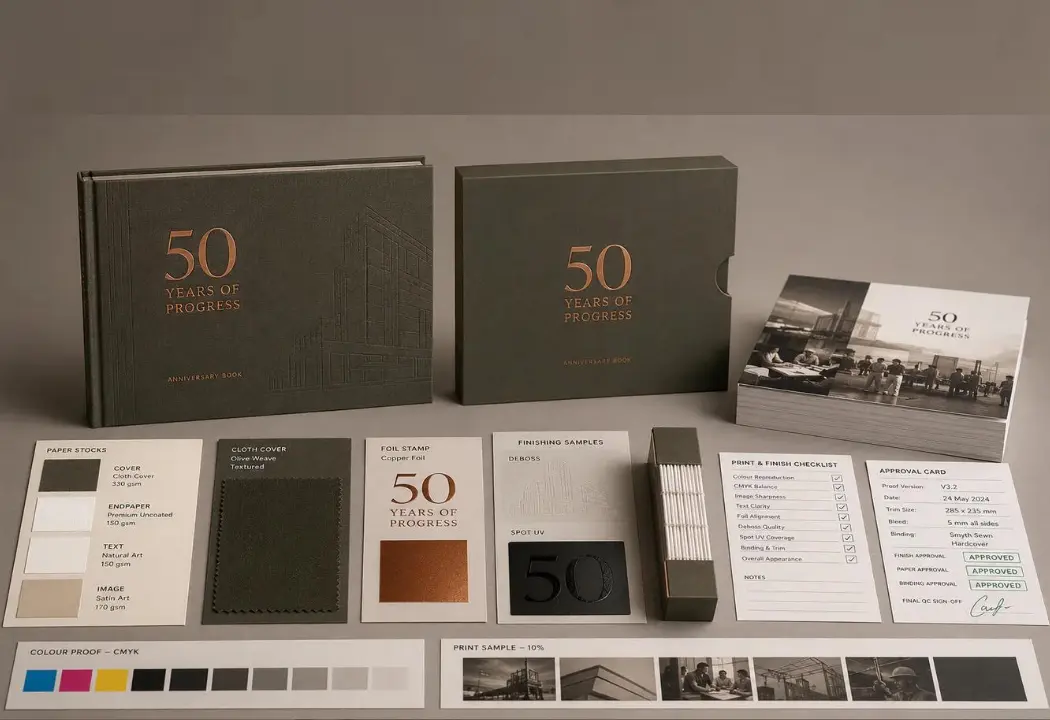
The physical materials influence how a coffee table book looks, feels, and holds up over time. Paper weight, surface finish, colour reproduction, cover material, and binding should be selected according to the design, budget, and intended use. Gloss-coated paper may suit image-heavy publications, while other finishes may better support a more understated editorial style.
Print specifications should be considered before final artwork is prepared. Bleed, safe margins, colour settings, image resolution, and binding requirements all affect the final result. The best choice is one that supports the content, matches the intended presentation, and fits the production budget.
What Is the Process of Creating a Coffee Table Book?
Creating a coffee table book involves more than designing individual pages. A structured process helps keep the concept, content, visual direction, and production requirements aligned.
1. Define the purpose and audience. Begin by identifying why the book is being created and who is expected to read it. A publication for investors may require a different tone and selection of content from one created to showcase a resort or celebrate a company anniversary.
2. Develop the concept and content plan. Establish the central theme, key messages, and overall narrative. Organize the material into chapters or sections, identify information gaps, and determine which photographs, illustrations, captions, and supporting text are needed.
3. Gather and prepare the visual material. Collect suitable photographs and confirm that they can be used for the intended publication. Review image quality, consistency, permissions, and any missing visuals before finalizing the layout.
4. Create the design and page layouts. Develop the cover, typography, colour palette, grid, and sample spreads. Once the visual direction is approved, apply the design consistently while adapting individual pages to their content.
5. Review and proofread the publication. Check text, names, dates, captions, image placement, brand details, and page order. A print proof can reveal issues that are difficult to spot on screen, allowing corrections before production.
6. Finalize files and printing. Prepare the approved artwork according to the printer’s specifications. Confirm paper, binding, finish, quantity, and delivery requirements before authorizing the print run.
Clear communication between the business, content contributors, designer, photographer, and printer helps reduce avoidable revisions. Agreeing on the scope and schedule at the beginning also makes the project easier to manage.
Frequently Asked Questions
A coffee table book may include photography, illustrations, short articles, captions, interviews, historical information, project descriptions, or other material related to its subject. The contents depend on the purpose of the publication.
A coffee table book generally places greater emphasis on visual presentation and browsing. It often uses larger pages, prominent imagery, and concise supporting text, while a conventional book may focus more heavily on continuous reading or detailed instruction.
Yes. Businesses can use a coffee table book to present their history, projects, products, people, or achievements in a format that reflects their brand identity. Its value depends on the quality of the content and how well the publication serves its intended audience.
Cost depends on factors such as page count, content preparation, photography, layout complexity, paper stock, binding, finishing, and print quantity. A clear brief and agreed production specifications help establish a realistic budget.
What Is the Process of Creating a Coffee Table Book?
A coffee table book can become a valuable way for a business to present its work, communicate its identity, and preserve important stories in a lasting format. Achieving that result requires more than attractive photographs. The concept, content, layout, typography, and production choices need to work together from the beginning.
Creative Plus offers branding and design services that can support businesses in developing a consistent visual presentation for their communications. Companies exploring a coffee table book project can review the Creative Plus Branding Services page to learn more about its design offering.
Conclusion
A coffee table book offers businesses a considered way to present their work, history, projects, or creative vision through visual storytelling. Its impact comes from the relationship between content, photography, layout, typography, and print quality.
When these elements are planned together, the result can communicate a brand’s character in a format that people can browse, revisit, and keep. For businesses considering this type of publication, a clear purpose and thoughtful design process are the foundations of a useful and well-presented book.